

Imagine the first sip of a brew that feels like stepping into a moon‑lit tavern in the Frostveil realm, where every note whispers ancient lore.
That moment is what we chase when we talk about artisan coffee beans – not just a caffeine hit, but a portal to a story you can taste.
Do you ever wonder why your favorite fantasy novel pairs so perfectly with a dark, buttery espresso? It’s because the beans have been hand‑selected, roasted with intent, and grounded with the same care you give to world‑building.
In our experience, the difference shows up in the aroma: a subtle hint of smoked oak, a flicker of midnight berries, a lingering echo of ember‑kissed spice. Those are the signatures you’ll find in Frostveil’s limited‑edition roasts.
So, what makes a bean truly artisan? First, the origin. We source micro‑lot beans from high‑altitude farms that treat each plant like a guarded relic. Second, the roast profile. It’s a slow, deliberate process that respects the bean’s natural sweetness while coaxing out mythic flavors.
Think about the last time you brewed a generic blend and felt…nothing. Now picture a cup that feels like a quest: the first taste is the call to adventure, the middle a battle of bright acidity, the finish a quiet victory.
Does that sound a little dramatic? Maybe, but coffee lovers in the grimdark and epic fantasy circles crave that drama. They want a ritual, not a shortcut.
Here’s a simple way to honor those artisan coffee beans at home: grind fresh, use water just off the boil, and pour slowly as if you were casting a spell. Let the grounds bloom, then watch the dark river swirl.
If you’ve ever felt stuck in a monotonous morning routine, swapping a mass‑market brew for a Frostveil‑crafted blend can be the spark that turns a bland day into a saga.
Ready to let your palate embark on its own legend? Let’s dive deeper into the world of artisan coffee beans and discover how each roast tells a tale worth sharing.
TL;DR
If you crave a coffee that feels like a spell‑bound quest, artisan coffee beans from Frostveil turn every sip into an adventure, blending high‑altitude micro‑lot flavor with a careful roast. Grab a bag, grind fresh, pour water off the boil, and let the river swirl—your morning ritual will be different.
Step 1: Unveiling the Origins of Artisan Coffee Beans
Ever stared at a bag of beans and wondered what story lives in each seed? You’re not alone. The moment you open a sack of Frostveil’s artisan coffee beans, you’re actually cracking open a tiny vault of geography, climate, and human care.
First, think about altitude. High‑altitude farms—often perched above 1,200 metres—force the coffee plant to work harder for sunlight. That slow‑growth concentrates sugars and acids, giving the beans that bright, layered flavor we all chase. It’s like a mountain‑climber’s endurance test, only the reward is a cup that sings.
Next, consider soil composition. Volcanic ash, rich in minerals, creates a unique terroir that imparts subtle mineral notes—imagine the faint taste of ancient stone mixed with midnight berries. When you brew, those notes emerge as a whisper, not a shout.
But it’s not just nature. The people who tend those rows are artisans in their own right. Small‑holder families hand‑pick each ripe cherry at the peak of ripeness, then wash and dry them under the same sunrise that inspired their folklore. That human touch is why you’ll detect a faint hint of spice, a reminder of the stories told around the fire while the beans dry.
So how do you trace that lineage back to your mug? Start with the farm label. Frostveil’s packaging always lists the micro‑lot name, elevation, and processing method. If you see “Shade‑grown, wet‑processed, 1,500 m,” you know you’re about to experience a bean that grew slowly, was protected from harsh sun, and had its fruit pulp removed cleanly—key steps for a clean cup.
Here’s a quick checklist to verify authenticity:
- Elevation listed (≥1,200 m is a good sign)
- Processing method noted (wet‑processed usually yields brighter acidity)
- Small‑batch or micro‑lot mention
- Origin story on the bag or website
When you spot all four, you can trust the beans are truly artisan.
Now, let’s talk roast. Frostveil’s roasters treat each micro‑lot like a manuscript, adjusting temperature curves to highlight the bean’s native characters. A lighter roast preserves the altitude‑born acidity; a medium roast brings out the volcanic minerals; a darker roast leans into the smoky, ember‑kissed notes. The key is to match the roast to the story you want to tell with your brew.
Want to experiment? Grab two bags from different elevations—say, a 1,200 m Ethiopian heirloom and a 1,800 m Colombian night‑shade. Brew them side by side using the same grind and water temperature. Taste the contrast: the Ethiopian will dance with citrus, the Colombian will linger with chocolate‑dark depth. That simple tasting exercise makes the origins tangible.
And because we love a good visual cue, here’s a short video that walks you through reading a bean‑origin label and what to expect from each processing style:
Notice how the roaster pauses at the “wet‑processed” line— that’s the moment the flavor profile starts to shape itself.
Once you’ve identified your beans, store them right. Keep them in an airtight container, away from light and heat. A dark glass jar in a pantry works better than a fridge, which introduces moisture.
For a deeper dive into Frostveil’s roasting philosophy, check out Artisan Coffee Alchemy: A Guide to Frostveil’s Fantasy Roasts. It breaks down how each step—from farm to cup—is crafted like a quest.
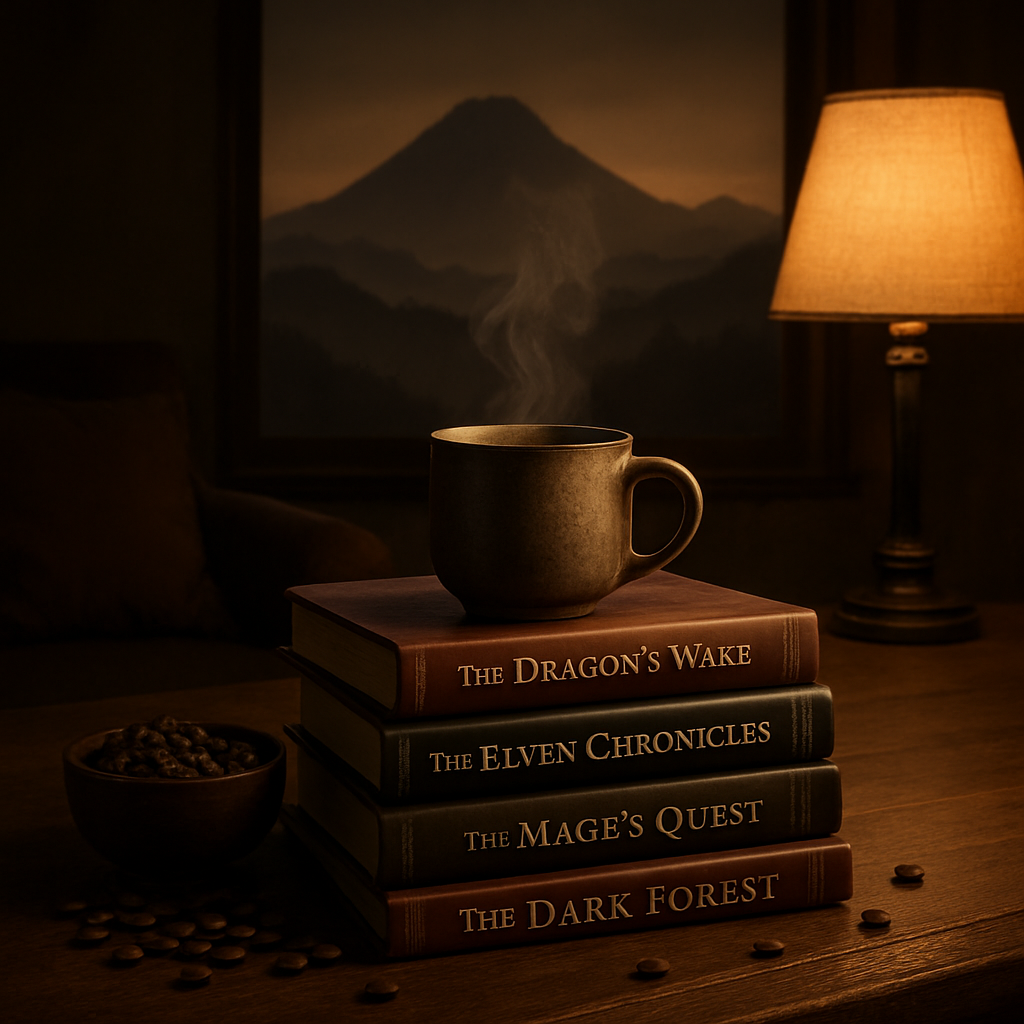
Finally, picture your reading nook. A cup of these beans beside a fantasy‑filled illustration can turn a simple morning into a ritual. Think about adding a piece of art that mirrors the bean’s origin, and you’ll see how taste and sight intertwine.
Step 2: The Alchemy of Roasting – From Bean to Legend
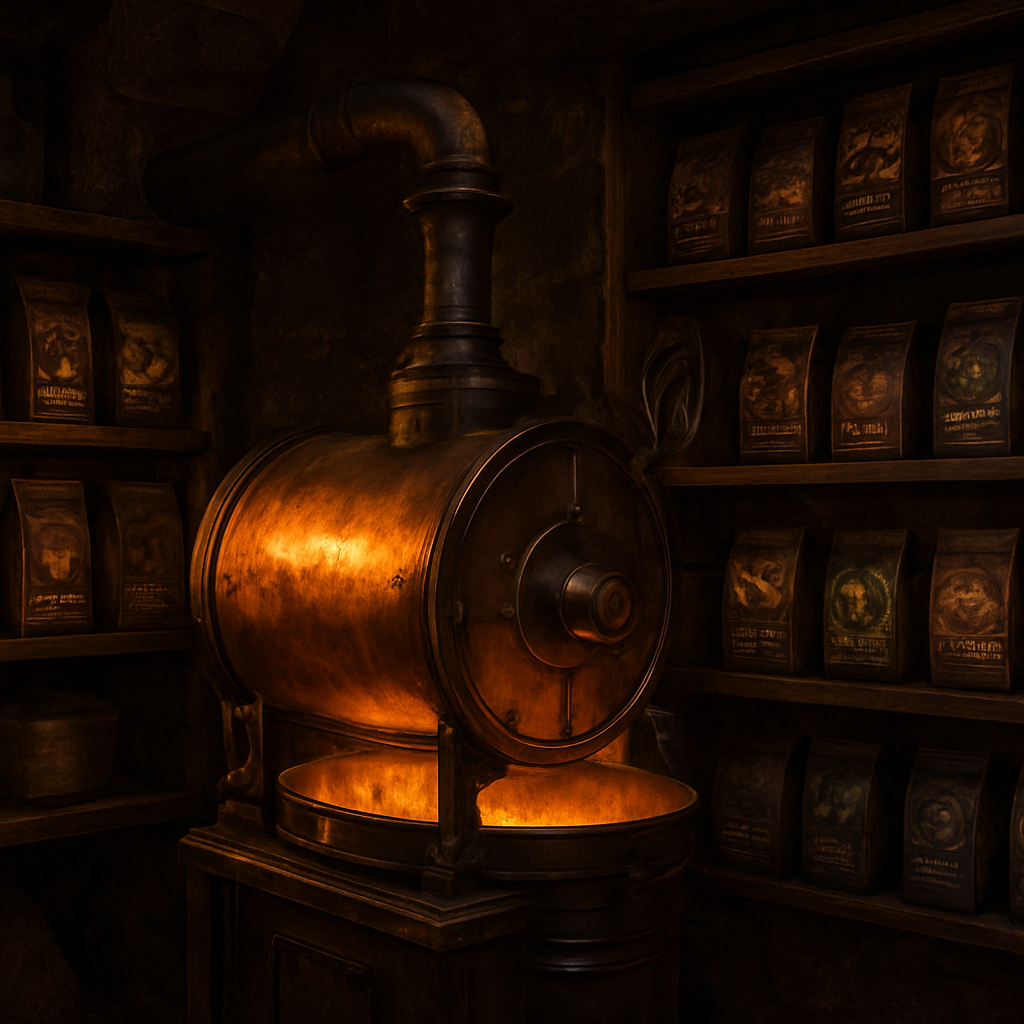
Picture this: you’re standing over a roaring copper drum, the scent of caramelized sugars swirling like a low‑lying mist over a forgotten citadel. That moment, the crackle of the first “first crack,” is where artisan coffee beans shed their raw skin and begin their transformation into legend.
In our experience, the roast isn’t just heat—it’s a ritual. It’s the point where you decide whether your beans become a sunrise‑bright scout or a midnight‑guard that lingers long after the last sip. So, how do we steer that alchemy?
Choosing the Roast Level
Think of roast levels as character classes. Light roasts are the agile rogues: bright, acidic, quick‑thinking. Medium roasts are the balanced knights, offering both body and nuance. Dark roasts? They’re the brooding warlocks, deep, smoky, and a little mysterious.
Each class pairs naturally with the fantasy‑inspired blends we craft. Our “Blackwood Hearthnut” leans toward a medium‑dark profile, letting the hazelnut whispers shine without drowning the underlying cocoa. The “Campfire Sentinel,” on the other hand, embraces a dark roast to echo the toasted marshmallow‑like finish of an evening around a campfire.
What should you look for on a roast chart? Three things: bean temperature, time in the drum, and the audible cracks. The first crack usually lands around 196 °C (385 °F); the second crack—if you chase a darker realm—arrives near 224 °C (435 °F). Pause at the point that feels right for the story you want to tell.
Watching a roast in action can feel like a live‑action role‑play. Notice how the beans tumble, how the color shifts from a pale amber to a deep mahogany. That visual cue tells you the sugars have caramelized, the acids have mellowed, and the oils have risen to the surface—signs that the bean’s flavor map is being rewritten.
Roast‑by‑Roast Cheat Sheet
| Roast Level | Bean Temp (°C) | Flavor Highlights |
|---|---|---|
| Light (Cinnamon) | 190‑200 | Bright acidity, floral notes, citrus zest |
| Medium (City) | 205‑215 | Balanced body, caramel sweetness, mild chocolate |
| Dark (French/Italian) | 220‑230 | Smoky, bittersweet cocoa, toasted nuts, lingering finish |
When you’re ready to roast at home, start with a small batch—maybe 200 g—so you can watch each stage without feeling overwhelmed. Use a scale to hit the temperature targets, and trust your ears. If the first crack sounds too soft, give the beans a few more seconds; if the second crack feels too aggressive, pull the drum a moment earlier.
And here’s a pro tip for fellow grimdark readers and gamers: pair a dark‑roasted “Campfire Sentinel” with a late‑night gaming session. The bold, smoky profile holds its own against the intensity of a boss fight, while the lingering sweetness mimics the reward of a hard‑won victory.
Finally, remember that roasting is as much about intuition as it is about numbers. The next time you hear that familiar pop, pause, breathe, and let the story of the bean unfold. Your cup will thank you with a legend worth retelling.
Step 3: Brewing Rituals that Echo Ancient Lore
When the first steam rises from your kettle, it’s like the first breath of a dragon waking from centuries of slumber.
That moment is the perfect cue to turn a simple brew into a ritual that feels straight out of a forgotten grimoire.
Choose a method that matches the story you want to tell
Do you prefer the quiet patience of a monk tracing sigils, or the swift, battle‑ready strike of a war‑lord? Your brewing gear can embody either vibe. A pour‑over dripper mirrors the careful inked lines of a spell‑scroll, while an Aeropress gives you the rapid, alchemical burst of a potion‑maker’s cauldron.
We like to start with the classic pour‑over because it lets artisan coffee beans reveal every nuance—mouthfeel, acidity, body, and aftertaste—without the distraction of pressure. The Coffee Chronicler breaks down why this method is the “ideal way to express a coffee bean’s true identity” and offers a quick guide you can follow here.
Step‑by‑step: The Lore‑Infused Pour‑Over
1. Gather your tools. You’ll need a V60 or similar dripper, a paper filter, a gooseneck kettle, a digital scale, and a timer. Lay them out like the components of a wizard’s bench.
2. Heat the water. Aim for 92‑96 °C—just off the boil. As the water bubbles, imagine the molten core of a volcano ready to release its power.
3. Weigh the beans. Measure 20 g of your favorite artisan coffee beans (for a single 300 ml cup). Freshly grind them to a medium‑fine texture, the consistency of fine sand on a moonlit beach.
4. Rinse the filter. Pour hot water through the paper filter, discarding the rinse water. This step wipes away any papery taste and warms the dripper—think of it as purifying a sacred chalice.
5. Bloom. Add the grounds, then pour just enough water (about 40 ml) to saturate them. Wait 30‑45 seconds while the beans “speak” and release carbon dioxide. That hiss is the whisper of ancient spirits.
6. Continue pouring. In a slow, steady spiral, pour the remaining water until you reach 300 ml total. Keep the pour gentle, like a bard’s lute strumming a lullaby.
7. Let it drip. Once the water stops flowing, give the brew a moment to settle. The final cup should shimmer with the depth of a midnight forest.
Infuse the senses
While the coffee drips, light a single candle scented with cedar or amber. The flicker adds a visual spell, and the aroma reinforces the earthy notes you’ll taste.
Play a low‑key soundtrack—perhaps a distant thunder roll or a harp melody. Sound, like scent, can pull the mind deeper into the story you’re crafting.
Seasonal twists for the fantasy‑focused
Want to echo a winter solstice? Add a pinch of ground cinnamon or a dash of vanilla bean to the grounds before brewing. For a fire‑festival vibe, stir in a few crushed cardamom pods after the pour; the spice will rise like sparks from a hearth.
These tiny adjustments are optional, but they reinforce the connection between the bean’s origin (the high‑altitude farms we discussed earlier) and the mythic setting you imagine.
Cleaning as part of the ritual
When you finish, don’t just dump the grounds. Rinse the dripper, wipe the kettle, and store your beans in an opaque, airtight container. Treat the equipment with the same reverence you’d give a treasured relic.
Doing so preserves the flavor integrity of your artisan coffee beans for the next quest.
Quick checklist
- Water 92‑96 °C
- 20 g beans, medium‑fine grind
- 30‑45 s bloom
- Steady spiral pour to 300 ml
- Candle, music, optional spice
- Clean equipment afterward
Now you have a repeatable ritual that transforms everyday coffee into an echo of ancient lore. The next time you sip, let the flavors remind you of the stories you love, and know that every cup is a tiny chapter you’ve authored.
Step 4: Tasting the Tale – Flavor Profiles & Pairings
Now that your brew has finished its ritual, it’s time to listen to what the cup is trying to say. A good sip is like a page of a fantasy novel: the opening line sets the scene, the middle builds tension, and the last line lingers in the mind.
Take a moment, hold the mug, and inhale. Do you smell a hint of smoked oak, a whisper of midnight berries, or maybe a flicker of toasted hazelnut? Those aromas are the first clues to the flavor profile hidden in your artisan coffee beans.
Identify the three core chapters of flavor
In our experience the palate of an artisan roast usually breaks down into three “chapters”: the bright acidity (the hero), the body (the guardian), and the finish (the lingering spell).
Chapter one – the hero’s spark. Light‑roasted beans from high altitudes often deliver citrus‑like brightness, like a sunrise over a crystal lake. If you taste a clean, lemony edge, you’re probably drinking a “Midnight Ember” style roast.
Chapter two – the guardian’s depth. Medium roasts bring caramel, chocolate, or nutty tones that give the cup weight. Imagine the steady march of a knight’s armor; that’s the body you feel on the tongue.
Chapter three – the lingering spell. Dark roasts leave a smoky, bittersweet aftertaste that clings like a rune on parchment. When the flavor hangs around for a minute, you’ve reached the finale.
So, what should you do next? Grab a spoon‑ful of the grounds, give it a quick sniff, then sip slowly, letting each chapter unfold.
Pairing with food, books, and game sessions
If you’re a grimdark reader, match a brooding dark roast with a rich stew or a piece of aged cheddar. The bitterness of the coffee balances the salty fat, creating a taste that feels like a battle won.
For an epic‑fantasy marathon, pair a medium‑roast “Blackwood Hearthnut” with a honey‑drizzled scone. The sweet honey mirrors the caramel notes, while the scone’s crumb adds texture, much like a well‑crafted quest line.
When you’re diving into a tabletop campaign, try a bright, floral Ethiopian “Frostveil Aurora” alongside fresh berries and a light cheese board. The acidity cuts through the fruit, keeping your senses sharp for dice rolls.
Do you ever wonder why certain coffees feel better with specific stories? It’s the same principle as a soundtrack: the right flavor accentuates the mood of the narrative you’re living.
Step‑by‑step tasting ritual
1. Set the scene. Light a cedar‑scented candle, cue a low‑key playlist, and silence the phone. The environment becomes part of the flavor.
2. Warm the cup. Pour a splash of hot water into the mug, swirl, and discard. This pre‑heats the glass, allowing the coffee to stay at the ideal temperature longer.
3. First sip – note the hero. Take a tiny sip, let it coat the tip of your tongue, then exhale. Write down any bright or fruity impressions.
4. Second sip – feel the guardian. Let a larger mouthful linger, notice the body, and see if chocolate, nut, or spice emerges.
5. Final sip – capture the spell. Finish the cup, pay attention to the aftertaste. Does it linger like ash, or fade like mist?
6. Record your notes. Keep a simple journal – a notebook or a phone note – with the roast name, tasting adjectives, and any pairing you tried.
Doing this ritual turns a daily coffee into a deliberate storytelling session, and over time you’ll develop a personal “flavor map” for each artisan coffee bean you explore.

Quick pairing checklist
- Bright roast – citrus fruit, light pastry, high‑energy game
- Medium roast – caramel desserts, cheese board, narrative‑driven campaign
- Dark roast – dark chocolate, smoked meats, intense boss fight
Give one of these combos a try tonight, and notice how the story in your cup mirrors the adventure on the page. The next sip will feel like a new chapter you wrote yourself.
Step 5: Caring for Your Artisan Beans – Storage & Longevity
When the last drop of your pour‑over hits the bottom of the cup, the adventure isn’t over – it’s just beginning. The next chapter is how you keep those artisan coffee beans vibrant for weeks, not days.
Why storage matters
Artisan coffee beans are a living story. Their flavors oxidize the moment they meet air, and the delicate aromatics can fade faster than a plot twist in a grimdark novel. In fact, small‑batch roasters emphasize freshness because a bean that’s been open for a month often loses the bright notes that made it special.
So, what’s the real shelf life? Coffee peaks a few days after roast, usually between three and four days, and can start to descend after ten days if it’s exposed to oxygen.
Choose the right container
The simplest rule: keep beans in an airtight, opaque vessel. Metal or thick‑wall glass jars with a rubber seal work wonders. Light is a silent thief – it triggers photo‑oxidation, turning a bean that’s been open for a month into a flat, cardboard taste.
For our “Midnight Ember” and “Frostveil Aurora” roasts, we recommend a matte‑black ceramic canister. The dark surface blocks stray photons, and the snug lid stops air from sneaking in.
Control temperature & humidity
Cool, stable temperatures are the hero’s safe haven. Aim for 15‑20 °C (59‑68 °F) and avoid the kitchen heat that rises when you’re brewing a second pot.
If you live in a damp climate, a tiny silica packet (food‑grade) inside the jar can keep humidity under 60 %. Too much moisture makes the beans swell, which accelerates staling.
Batch rotation – a ritual worth repeating
When you bring a new bag home, label it with the roast date. Then, follow a “first‑in, first‑out” system. Pull the oldest bag for today’s brew, and stash the fresh one behind it. This habit mirrors the way we rotate story arcs in a campaign – the oldest plot gets resolved first.
Real‑world example: a fellow BookTok creator kept two 250 g bags of our “Campfire Sentinel”. By rotating weekly, each cup retained its smoky depth for the full two‑week window.
Special tips for fantasy lovers
1. Freeze for long‑term storage only if you’re willing to thaw a portion each time. Split the bag, freeze one half in a vacuum‑sealed bag, and keep the other half at room temperature for daily use. Thaw in the fridge for 12 hours – never at room temp.
2. Add a pinch of sea salt to the jar lid before sealing. The tiny salt crystals absorb residual moisture, a trick borrowed from ancient spice merchants.
3. Pair storage with a sensory pause. Before you grind, give the beans a 30‑second sniff. If the aroma feels muted, it’s time to brew a fresh batch.
Quick storage checklist
- Opaque, airtight container (metal or dark glass).
- Label with roast date; use oldest beans first.
- Store in a cool, dark pantry – avoid the stove.
- Keep humidity below 60 % (silica packet optional).
- Freeze only in sealed, portioned bags for >2 weeks.
- Sniff before grinding – if it’s flat, it’s past its prime.
By treating your artisan coffee beans with the same reverence you give a treasured spellbook, you’ll extend the narrative of each cup. Your next sip will still feel like stepping into a moon‑lit tavern, not a stale tavern cellar.
FAQ
What makes artisan coffee beans different from regular supermarket blends?
Think of artisan coffee beans as the lone hero of a story, while a supermarket blend is more like a crowd‑filled tavern. Artisan beans are usually sourced from a single micro‑lot, roasted in small batches, and handled with a level of care that lets each origin’s personality shine. That means you’ll taste distinct notes—maybe a whisper of midnight berries or a hint of smoked oak—rather than a flat, generic roast that’s designed to please everyone.
How should I store artisan coffee beans to keep their flavor alive?
First, grab an opaque, airtight container—metal or dark glass works best. Keep it in a cool, dark pantry away from the stove, and label the lid with the roast date so you use the oldest beans first. If you need to keep beans for more than two weeks, split the bag and freeze a portion in a vacuum‑sealed pouch; just thaw it in the fridge, never at room temperature. A quick sniff before grinding will tell you if the beans have lost their spark.
Can I grind my own artisan coffee beans at home, and why does it matter?
Absolutely, and it’s a game‑changer. Grinding just before brewing preserves the volatile oils that carry the bean’s aroma and flavor. Use a burr grinder for a consistent grind size—too coarse and you’ll miss the bright acidity, too fine and you’ll over‑extract bitterness. A medium‑fine grind works well for pour‑over, which is the method we recommend to let the bean’s story unfold without distraction.
What brewing method highlights the fantasy‑inspired notes in Frostveil’s roasts?
Our experience shows that a classic pour‑over, like a V60 or Chemex, acts like a spell‑casting ritual: you control water temperature, pour rate, and bloom time. Aim for 92‑96 °C water, let the grounds bloom for 30‑45 seconds, then pour in a slow spiral. The result is a clean cup where the smoky depth of a “Campfire Sentinel” or the floral whisper of a “Frostveil Aurora” can really sing.
Is there a quick way to tell if my artisan coffee beans have gone stale?
Yes—sniff, then taste. Fresh beans should give off a vibrant aroma that feels almost tactile, like you could reach into a moon‑lit forest. If the scent is flat, like old parchment, the beans are past their prime. When you brew, a stale cup will taste dull, lacking the bright hero’s spark we talked about. When in doubt, grind a tiny sample and brew a single cup; if it feels muted, it’s time for a new bag.
How often should I rotate my coffee stock to avoid waste?
Treat your beans like a rotating quest log. When a new bag arrives, label it with the roast date and place it behind the older one. Use the “first‑in, first‑out” rule for each brew session. This habit not only keeps flavor at its peak but also prevents you from hoarding a bag that will lose its magic before you’ve even opened it.
Do I need special equipment to enjoy artisan coffee beans, or can I start with what I have?
You can start with the basics—a good kettle, a scale, and a simple dripper. If you already have a French press, just adjust the grind to a coarser setting and steep for four minutes; you’ll still taste the nuance, though the clarity won’t be as sharp as a pour‑over. As you grow more comfortable, you might invest in a burr grinder or a temperature‑controlled kettle, but the most important tool is your curiosity and willingness to experiment.
Conclusion
We've walked the path from high‑altitude farms to the final pour, and if anything's clear it’s that artisan coffee beans are more than a drink—they're a story you get to retell every morning.
So, what does that mean for you, the grimdark reader or the epic‑fantasy gamer? It means you can turn a routine caffeine fix into a ritual that feels like stepping into a tavern lit by torchlight. Grab a fresh bag, label the roast date, and let the first‑in‑first‑out rule be your quest log.
Remember the three checkpoints we’ve covered: origin, roast, and brew. Check the altitude on the bag, pick a roast level that matches your mood, then brew with a pour‑over or French press while the kettle sings. If the aroma still feels flat, trust your nose—stale beans have lost their hero’s spark.
Looking ahead, treat each cup as a checkpoint in your own adventure. Keep a simple notebook of flavor notes, experiment with a pinch of spice, and let the next batch of artisan coffee beans become the chapter you’ve been waiting for.
Ready to write the next page? Your next brew is waiting on the shelf—just open it, breathe deep, and let the tale begin. May each sip fuel your imagination and keep the realm of Frostveil alive in every sunrise.