

Picture this: you’ve just finished an epic night of reading a grimdark saga, the rain tapping like distant drums, and you crave something that feels both comforting and otherworldly. You reach for a bottle, but not just any bottle—something that can hold the chilled alchemy of a perfect cold brew, ready to fuel the next chapter of your adventure.
That yearning for a mythic sip is exactly why we at Frostveil love the cold brew coffee recipe. It’s simple enough for a novice alchemist, yet rich enough to satisfy the most hardened dark‑fantasy aficionado. In our experience, the secret isn’t just the beans—it’s the ritual: the right grind, the patient steep, and a touch of imagination.
First, choose a roast that whispers of ancient forests—our Crafting Enchanted Cold Brew Coffee: A Frostveil Guide to Mythic Brewing recommends a coarse, medium‑dark grind. Measure about 1 cup (85 g) of beans per 4 cups (960 ml) of filtered water. If you’re brewing for a gaming marathon, double the batch; the math stays the same, just scale the containers.
Next, combine the grounds and water in a glass jar or a sturdy pitcher—no metal, lest the enchantment be disturbed. Stir gently, then seal and let the mixture rest in the refrigerator for 12‑18 hours. During this time, the flavors meld like characters converging on a quest board.
When the time’s up, strain through a fine‑mesh sieve or a cheesecloth. The result? A velvety, low‑acid brew that feels like a cool breeze over a frost‑kissed battlefield. Serve over ice, add a splash of oat milk if you like, and garnish with a cinnamon stick for that extra hint of spice reminiscent of ember‑lit taverns.
Real‑world tip: pour the finished brew into a reusable bottle and keep it chilled. It’s the perfect companion for long reading sessions, late‑night D&D campaigns, or simply savoring a quiet moment after a quest.
So, what’s the next step? Grab your favorite Frostveil blend, set a timer, and let the cold brew ritual begin. Your taste buds—and your imagination—will thank you.
TL;DR
Our cold brew coffee recipe blends fantasy lore with artisan technique, giving you a smooth, low‑acid brew that fuels midnight reading or epic gaming sessions.
Just grind, steep, and strain—then pour into a reusable bottle, chill, and let the mythic flavor carry you through any quest, questline, or chapter today.
Step 1: Selecting the Frostveil Bean Blend
Imagine the moment you open a sealed pouch of Frostveil beans and the scent of ancient forests rushes to you, like a gust of wind through a pine‑laden canyon. That first whiff is the compass that tells you you’re about to start something magical, not just another coffee routine.
First things first: choose a blend that matches the mood of your upcoming quest. For a moonlit reading marathon, our medium‑dark “Nightshade Roast” offers a balanced, slightly chocolatey backbone with a whisper of smoked oak. If you’re gearing up for an intense gaming raid, the “Dragon’s Breath Blend” leans a touch darker, delivering bold, earthy notes that keep you focused without the jitter.
Why does the roast matter? Cold brew extracts flavors differently than hot brewing. A coarser grind and a smoother roast let the low‑acid sweetness shine, while a too‑light roast can leave the brew tasting grassy or overly acidic. In our experience, a medium‑dark profile hits the sweet spot for most fantasy‑themed cold brews.
Step‑by‑step bean selection
1. Check the roast date. Freshness is key – beans roasted within the last three weeks retain the nuanced flavors we love.
2. Assess the grind size. For cold brew, aim for a coarse, almost sea‑salt texture. If you grind too fine, you’ll end up with a cloudy, over‑extracted brew.
3. Measure precisely. The golden ratio we recommend is 85 g of beans for every 960 ml of filtered water. That’s roughly one cup of beans per quart of water – enough to fill a sturdy bottle without waste.
4. Store properly. Keep your beans in an airtight container, away from direct sunlight. A dark pantry or a cabinet with a wooden lid works best; the less light, the longer the flavor stays vibrant.
5. Trust your senses. If the beans feel too oily or the aroma feels muted, it might be time to pick a different batch. The right beans should feel dry to the touch and release a rich, layered perfume when you crush them between your fingers.
So, you’ve got your beans. What’s next? It’s time to let them rest in their own little sanctuary – the refrigerator.
Before you head to the fridge, consider the vessel you’ll use. A wide‑mouth glass jar lets you see the beans shift as they hydrate, and it avoids any metallic interference that could dull the flavor. If you’re a visual storyteller, label the jar with a rune or a simple hand‑drawn sigil – it adds a touch of ritual to the process.
Watching the video above can give you a sense of the rhythm – a gentle stir, a patient seal, and the quiet hum of the fridge acting like a dragon’s breath, slowly coaxing flavor from the beans.
Once the steep is complete, you’ll notice a subtle layer of foam forming on top. That’s the natural oils rising – a sign you’ve captured the essence of the blend. Skim it off if you prefer a crystal‑clear brew, or leave it for extra body; both approaches are valid in the realm of cold brew alchemy.
Finally, think about how you’ll transport your potion. A sturdy, reusable bottle with a tight‑fit lid keeps the brew chilled for hours, ready for that surprise midnight reading session or an unexpected raid call. The right bottle feels like an extension of the ritual, protecting the brew’s integrity until the very last sip.
Choosing the right Frostveil bean blend isn’t just a step; it’s the opening chapter of your cold brew saga. When you honor the beans, the rest of the ritual – steeping, straining, savoring – flows naturally, like a story finding its perfect ending.
Ready to embark on the next phase? Grab your chosen blend, measure it out, and set the timer. The adventure begins with that first aromatic breath.
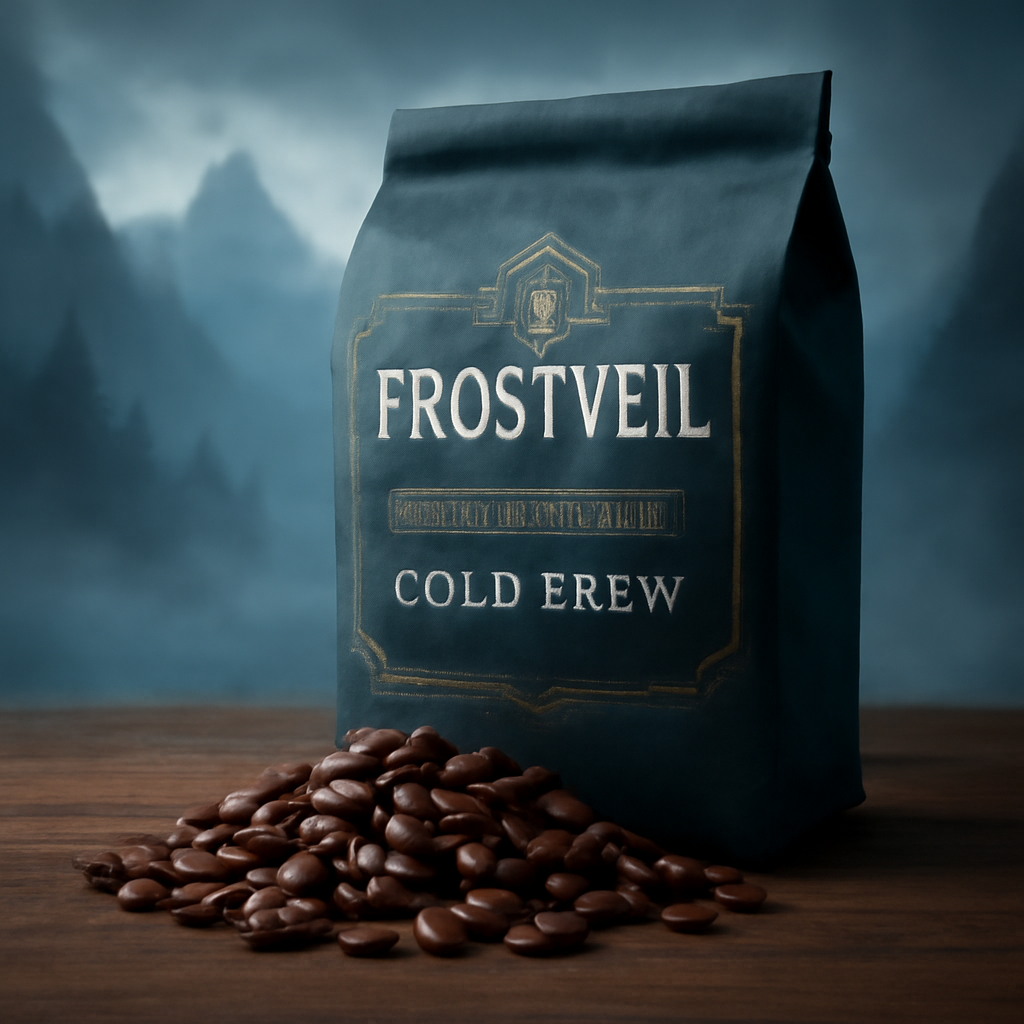
Step 2: Grinding the Beans for a Silken Infusion
Now that your Frostveil blend is ready, the next act in this cold‑brew saga is grinding. It feels a bit like sharpening a sword before a battle – the sharper (or in our case, coarser) the edge, the smoother the victory.
Why does grind size matter so much? Cold brew sits in water for hours, letting every particle whisper its flavor. Too fine, and those whispers turn into a shouted, bitter chorus; too coarse, and the water barely hears anything at all. The science is simple: surface area drives extraction, and a coarse grind size gives the right balance for a silky infusion.
Ever taken a sip of a brew that tasted like chalk? That’s the over‑extraction nightmare most beginners fall into. Imagine you’re a mage who accidentally adds too much fire to a potion – the result is scorching, not enchanting. So, what should you aim for?
Picture a handful of sea‑salt crystals – that’s the visual cue we love. The grounds should look like kosher salt, with each granule distinct and no cloud of dust at the bottom of the grinder. If you can see a fine powder, you’ve gone too fine, and the brew will turn bitter and muddy. That’s exactly why coarse grounds matter for a clean cup.
Our recommendation? Invest in a burr grinder if your budget allows. Burrs crush beans between two plates, delivering uniform pieces every time. Set the dial to the coarsest setting, then give it a quick test grind; you should be able to pick out each chunk with your fingers. The consistency you get here is the secret weapon behind Frostveil’s “silken” cold brew.
Blade grinders, while tempting for their low price, are the equivalent of a blunt axe. They chop the bean unevenly, leaving you with a mix of powder and pebble. The fine shards over‑extract, the big chunks barely contribute, and you end up with a brew that’s part mud, part bitter‑espresso. If you’re stuck with a blade, consider pulsing in short bursts and sieving out the fines before they join the jar.
For the truly frugal or the lovers of tactile rituals, a hand‑crank grinder works surprisingly well. Because you’ll be grinding once a week rather than daily, the extra minutes feel like part of the ritual. Look for a model that boasts a “coarse” setting; the manual effort actually helps you gauge the texture by feel.
Step‑by‑step grind checklist
- Measure 85 g (about 1 cup) of Frostveil beans.
- Load the grinder and select the coarsest burr setting.
- Grind until the grounds resemble coarse sea salt – no sand, no powder.
- Pause, scoop a spoonful, and feel for uniformity; adjust the dial if needed.
- Transfer the grounds straight into your cold‑brew vessel; avoid letting them sit exposed for too long.
Notice any lingering fine particles? That’s a sign to give your grinder another pass or to shake the grounds through a fine‑mesh sieve before they meet the water. A quick “finger test” can save you from a cloudy batch later on.
What if your brew still feels thin after the 12‑hour steep? First, double‑check the grind – it might be a shade too coarse for the particular roast you chose. Slightly finer (think medium‑coarse) can boost extraction without inviting bitterness. Conversely, if the flavor is harsh, swing back to extra‑coarse and consider shortening the steep by an hour.
Here’s a pro‑tip that most coffee alchemists overlook: keep a small dish of kosher‑salt next to your grinder as a visual reference. When you’re unsure, a quick glance at the salt tells you whether you’re on target. It’s a tiny habit that keeps your cold brew consistently smooth.
Finally, remember that grinding is the only step where you actively change the beans. Treat it with the same reverence you’d give a rare spell component. A perfectly coarse grind turns the long, cold soak into a potion worthy of any dark‑fantasy saga.
Step 3: Brewing the Elixir – Cold Brew Method
Now the grounds are ready, it’s time to let the magic happen. You’re about to turn a simple jar of water and coffee into a potion that feels like a frost‑kissed sunrise on a battlefield.
First, pour the measured cold water over the coarse grounds. A gentle stir—just enough to make every crystal disappear—ensures the beans are fully saturated. Think of it as summoning the spirits of the beans; you want every particle invited to the council.
Set the temperature
Most of us keep the brew in the fridge, and that’s fine. The cold temperature slows extraction, giving you a smoother, less acidic brew. If you don’t have fridge space, a cool pantry at around 18‑22 °C works, too. The key is consistency; a sudden warm spell can over‑extract and introduce bitterness.
Why does temperature matter? A quick dive into cold brew chemistry explains that lower temps keep harsh acids at bay while coaxing out natural sugars and oils (see cold brew chemistry). In other words, the chill is your ally, not an obstacle.
Steep like a sorcerer
Seal the container and let it rest for 12‑24 hours. Twelve hours is the sweet spot for most Frostveil blends—long enough to pull the chocolate‑nutty depth, short enough to avoid a muddy finish. If you crave a stronger concentrate, extend toward 18 hours; if you prefer a lighter elixir, pull the plug at 12.
Do you ever wonder why some batches feel thin? It’s often a timing issue. The cold brew steeping guide notes that extraction ramps up slowly; the longer the brew, the higher the total dissolved solids. Adjust your steeping window based on taste, not just the clock.
Mid‑brew stir (optional but powerful)
Halfway through the steep, give the jar a gentle swirl. This tiny agitation redistributes water around the grounds, promoting even extraction. It’s like giving the brew a quick massage—nothing dramatic, just enough to keep the flavors balanced.
Remember, over‑stirring can break up the coarse particles and introduce fines that muddy the final cup. A single, gentle swirl is all you need.
Strain with precision
When the time’s up, it’s time to separate the liquid gold from the sediment. Set a fine‑mesh sieve or a cheesecloth over a clean pitcher and pour slowly. If you notice a few stubborn specks, give the grounds a quick shake in the sieve first; the result is a crystal‑clear brew.
For the truly meticulous, a second pass through a coffee filter removes any lingering fine particles, leaving a brew as smooth as a moonlit lake.
Store and serve
Transfer the strained cold brew into an airtight bottle—glass is ideal for preserving flavor integrity. Keep it in the fridge and you’ll have a ready‑to‑drink elixir for up to two weeks. The longer it sits, the more the extraction continues, so taste it after a few days and decide if you prefer a fresher or slightly richer profile.
Serve over ice, splash in a splash of oat milk, or garnish with a cinnamon stick for that ember‑tavern vibe. The beauty of the cold brew method is its versatility—your potion can adapt to any quest, from a midnight reading marathon to an early‑morning raid.
Pro tip: If you’re brewing for a gaming group, make a batch double the size and keep individual bottles on a chilled tray. Everyone gets their own “mana potion” without waiting for a refill.
So, what’s the final spell? Measure, stir, chill, wait, strain, and enjoy. The cold brew coffee recipe is simple, but the ritual—your personal touch—turns it into a legend.
Step 4: Infusing with Frostveil’s Enchanted Flavors
Now the potion is ready, but a cold brew without a spell of flavor is like a dragon without fire. This is where we add the enchanted herbs and spices that turn a plain brew into a story you can sip.
Pick your magic ingredients
Think of your Frostveil blend as the base of a quest. To level it up, choose one or two spices that complement the roast. Dark, chocolate‑rich beans love warm, woody notes like cinnamon or clove, while a lighter, fruity roast shines with ginger or cardamom. The craft coffee guru explains that whole‑spice forms (sticks, pods, sliced roots) dissolve cleanly without leaving gritty residue.
Here’s a quick cheat sheet you can keep on your brewing altar:
| Spice | Amount per 4 cups brew | Flavor note |
|---|---|---|
| Cinnamon stick | 1‑2 sticks | Sweet, woody warmth |
| Cardamom pods | 4‑5 pods, lightly crushed | Floral‑citrus lift |
| Ginger slice | 1‑2 inches, thinly sliced | Zingy heat |
Grab the spices, give them a gentle bruise with the back of a spoon, and you’ll release their oils without over‑extracting.
Two ways to weave the flavors
Method A – Infuse during the steep. Toss your chosen spices straight into the jar with the coffee grounds before you seal it. Give everything a quick stir so the spices coat the grounds, then let the brew sit for the usual 12‑18 hours. The cold temperature lets the aromatics meld slowly, preserving their nuance.
Method B – Post‑brew boost. If you prefer more control, strain the cold brew first, then place the liquid in a clean jar with the spices. Let it sit for 2‑4 hours, tasting every hour until the flavor hits the sweet spot. This method is great when you want a subtle hint of ginger that you can dial up or down on the fly.
Both approaches are championed by the Roasty Coffee guide, which notes that a shorter post‑brew infusion keeps the coffee’s bright acidity while still delivering a punch of spice.
Step‑by‑step ritual
- Measure 85 g (1 cup) of Frostveil grounds into your jar.
- Add the spice combo from the table above.
- Pour 960 ml (4 cups) of filtered, cold water over the mixture.
- Stir gently – you’re just coaxing the spices to meet the coffee, not creating a storm.
- Seal and refrigerate for 12‑18 hours (Method A) *or* for 2‑4 hours after straining (Method B).
- When the aroma feels right, strain again through a fine mesh or cheesecloth to capture any spice bits.
- Transfer to a glass bottle, keep it cold, and serve over ice with oat milk or a splash of almond milk for extra silk.
Pro tip: If you’re brewing for a gaming night, prepare a “spice station” so each player can add a dash of their favorite herb to their own bottle. It turns a shared brew into a personalized potion.
Real‑world examples
One of our Frostveil community members, a BookTok creator who streams nightly reading marathons, swears by the Cinnamon‑Orange infusion. She adds two cinnamon sticks and a strip of orange peel during the steep, then pours the finished brew over ice with a splash of oat milk. The citrus cuts the sweetness just enough to keep her palate awake for eight chapters straight.
Another fan, an avid D&D DM, prefers a Ginger‑Cardamom kick. He crushes a few cardamom pods, slices fresh ginger, and lets them steep for four hours after the brew is filtered. The result is a subtle heat that mirrors the tension of a dragon‑encounter, perfect for keeping players on edge.
If you’re feeling adventurous, try a Holiday Clove‑Nutmeg blend during the winter solstice. A single clove and a pinch of freshly grated nutmeg add a festive whisper without overwhelming the coffee’s natural chocolate notes.
Fine‑tuning the enchantment
Start low – a half‑teaspoon of ground spice or one whole stick is usually enough. Taste every hour; you can always add more, but you can’t take it out. Fresh spices deliver the brightest aroma, so keep your pantry stocked with whole‑grain versions.
Water quality matters just as much as spice quality. Filtered water prevents unwanted mineral flavors that can clash with delicate notes like cardamom.
Finally, store your spiced concentrate in a sealed glass bottle. Flavors often deepen after a day, so don’t be surprised if the brew tastes richer on day two.
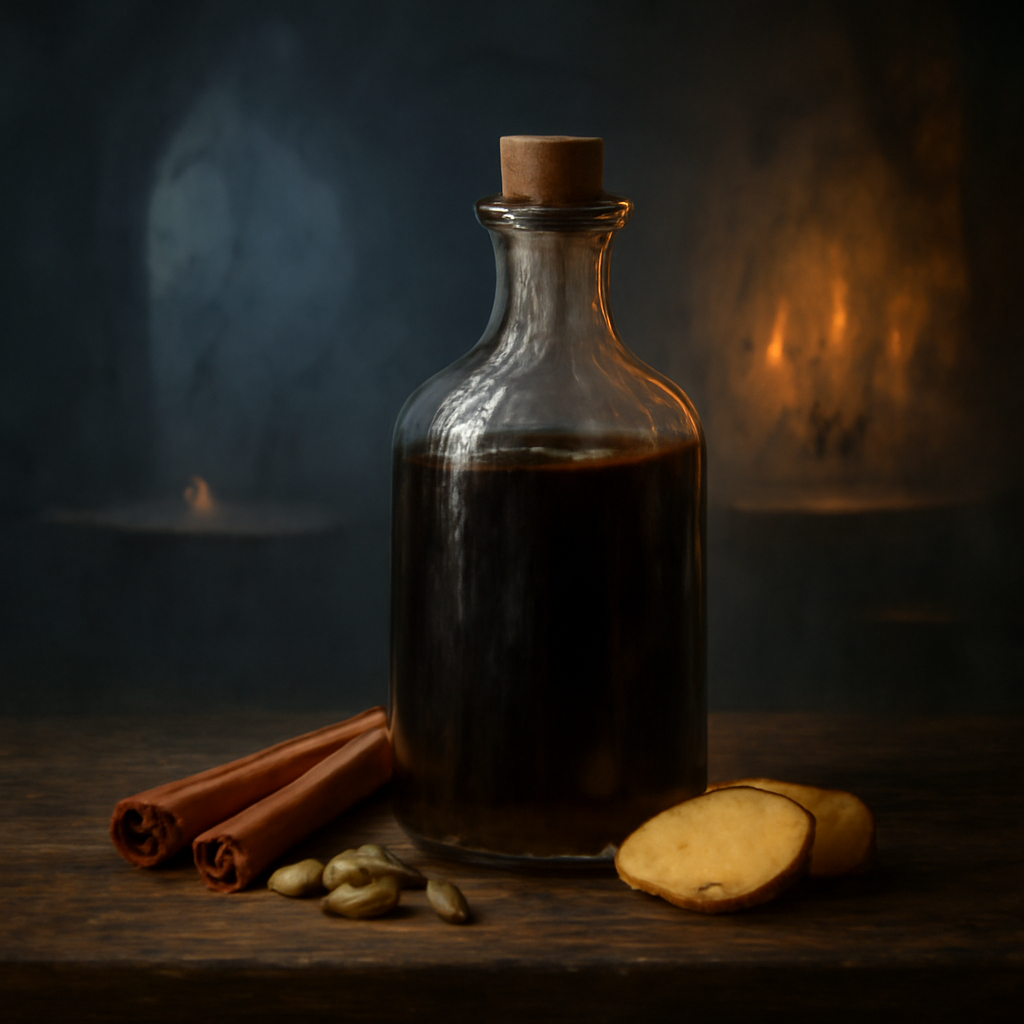
Step 5: Serving the Brew with Mythic Rituals
You've coaxed the beans, steeped the spirit, and now the potion sits ready. But a cold brew isn't finished until you present it like a relic from a forgotten kingdom. How do you turn a simple glass into a ceremony that makes a grimdark reader or a midnight DM pause and smile?
Choosing the right vessel
First, pick a mug or jar that feels like a chalice. Clear glass shows the deep, midnight hue, while a frosted stone tumbler whispers of ancient taverns. If you have a reclaimed pewter tankard, even better – the metal keeps the brew colder longer.
And don’t forget the size. A 12‑oz serving lets you savor the flavor without diluting it too quickly. For a gaming night, a larger pitcher with individual stone cups can become a shared “mana pool.”
Temperature and ice tricks
Cold brew shines between 40°F and 50°F. Too icy and the subtle chocolate notes disappear; too warm and the smooth body feels flat. One trick we swear by is freezing coffee ice cubes in a shallow tray. Drop a few into the glass and watch the brew stay chill without watering down the magic.
Another secret is a quick “mist” of chilled filtered water over the surface before you pour. It creates a thin vapor that lifts aromatic oils, letting the scent of cardamom or cinnamon drift like incense in a cathedral.
According to expert serving guidelines, the key is to balance temperature with dilution – a principle that works perfectly for our mythic blends.
Ritual garnishes
Now for the flourish. A single cinnamon stick, a twist of orange peel, or a dusting of cacao powder can transform the sip into a story. Imagine a sprig of fresh mint perched like a tiny banner on a hill, or a shard of dark chocolate that slowly melts, releasing whispers of the forest.
We like to add a pinch of ground star‑anise for a faint licorice echo, especially when the brew is paired with a dragon‑themed reading marathon. And if you’re feeling theatrical, rim the glass with a thin coat of cocoa powder – it sticks when the glass is still cold, giving each sip a gentle, bittersweet edge.
For those who love a little extra alchemy, custom blend ideas suggest mixing a splash of vanilla bean syrup or a drizzle of honey right before serving. The sweetness never overpowers the brew; it merely lifts the darker notes, like moonlight on a stone wall.
Sharing the spell
When you serve, think of the moment as a mini‑quest. Hand each cup with a short incantation: “May this brew steady your hand and sharpen your mind.” The words aren’t required, but they make the experience feel intentional.
And don’t forget the visual cue. Place a small candle or a rune‑etched coaster beside each glass. The flicker of flame against the dark liquid mirrors the contrast between light and shadow that our fantasy readers adore.
Finally, give your guests a chance to tweak their own potion. Set out a “spice station” with extra cinnamon sticks, a pinch of ground cardamom, and a splash of oat milk. Letting people personalize their cup turns a simple drink into a collaborative ritual – perfect for a BookTok live‑read or a D&D session.
So, what’s the next move? Grab your chilled bottle, choose a vessel that feels legendary, add a garnish that tells a story, and serve it with the reverence of a court wizard. The cold brew coffee recipe isn’t just a set of steps; it’s a myth you get to live each morning.
Conclusion
So, you’ve walked through each step of the cold brew coffee recipe, from picking the perfect Frostveil beans to the final flourish of a rune‑etched garnish.
What does all that ritual buy you? A brew that feels like a story you can sip, steady enough for a marathon reading session and magical enough to fit right into a D&D night.
If you ever wonder whether the extra spice or the chilled glass really matters, think of it like adding a new character to your campaign – it changes the tone without breaking the plot.
And when the morning fog rolls in, you’ll find that the brew’s low‑acid smoothness lets you linger over the next chapter without the dreaded caffeine crash.
So, what’s the next move? Grab your Frostveil blend, set a timer, and let the cold brew coffee recipe work its quiet magic while you dive back into the pages you love.
Remember, the ritual isn’t about perfection—it’s about creating a personal myth that fuels imagination. Keep experimenting, share your own spell‑casting tips on BookTok, and let the community inspire your next batch.
In the end, a great cold brew is more than a drink; it’s a portable portal to the realms you explore, ready whenever you raise your cup.
FAQ
How long should I steep my cold brew coffee recipe for the best flavor?
Most of us find the sweet spot between 12 and 18 hours. If you pull the jar out after 12 hours you’ll get a clean, bright cup; let it linger to 15 hours and the body deepens without turning bitter.
Anything past 20 hours can start extracting those harsher compounds, especially if your fridge runs a bit warm. Keep the temperature steady around 4‑6 °C and you’ll end up with a smooth, low‑acid brew that fuels a reading marathon.
Can I use any coffee beans for a cold brew coffee recipe, or are specific roasts better?
You can technically steep any roasted bean, but not all give that mythic smoothness we chase. Light roasts tend to bring out bright acidity that can become sharp after a long soak.
Medium‑dark or dark roasts, like Frostveil’s “North Woods Brew,” carry chocolate‑nutty notes and naturally lower acid, which translates into a velvety cold brew coffee recipe.
If you’re after a story‑rich cup, stick with a low‑acid, 100 % Arabica blend and watch the flavor unfold.
What’s the ideal coffee‑to‑water ratio for a smooth, low‑acid cold brew coffee recipe?
The classic ratio that yields a balanced, smooth cup is about one part coffee to four parts water by weight – roughly 85 g of grounds to 960 ml of filtered water.
If you prefer a stronger concentrate for an espresso‑style splash, bump the coffee up to 100 g while keeping the water the same.
Conversely, for a lighter, more refreshing draft, drop the grounds to 70 g. Adjusting the ratio lets you fine‑tune caffeine and body without compromising the low‑acid profile.
Do I need special equipment to make a cold brew coffee recipe at home?
You don’t need a fancy appliance, just a few trusty tools. A large glass jar or a stainless‑steel pitcher works as the steeping vessel – avoid reactive metal that could alter the flavor.
A burr grinder set to a coarse, sea‑salt texture gives the grounds the surface area they need.
Finally, a fine‑mesh sieve, cheesecloth, or a coffee filter will separate the brew cleanly. With these basics you can craft a cold brew coffee recipe that feels like alchemy, no lab required.
How can I store my cold brew coffee recipe without it going stale?
Store your brew in a sealed glass bottle or a mason jar with a rubber gasket, then pop it in the fridge.
The cold environment slows any further extraction, so the flavor stays bright for up to two weeks.
If you notice a slight deepening after a few days, give it a quick sniff – a bit of extra richness is often welcome. For maximum freshness, keep the bottle away from strong‑smelling foods; coffee is a bit of a snob.
Can I add flavors or spices to my cold brew coffee recipe without ruining the balance?
Spicing your cold brew is like adding a side‑quest – it can level up the experience without breaking the main story. Toss a cinnamon stick, a few crushed cardamom pods, or a slice of ginger into the jar before you seal it for a gradual infusion.
If you prefer more control, strain the brew first and let the spices steep in the liquid for 2‑4 hours, tasting every hour. Just remember to start low; a little spice goes a long way.
You can also experiment with orange zest for a citrus lift or a pinch of vanilla bean syrup for a creamy finish. Keep the infusion time short if you want the coffee’s natural chocolate notes to stay front‑and‑center.
Is it okay to reuse the coffee grounds after a cold brew coffee recipe for another batch?
Re‑using the grounds after a cold brew isn’t ideal if you want the same depth, because most of the soluble sugars and oils have already been extracted.
You can, however, give them a second, shorter steep (about 4‑6 hours) to pull a light, mellow concentrate that works well as an iced coffee base or a flavor‑enhancer for smoothies.
Just remember the second batch will be thinner and less caffeinated, so adjust your water ratio accordingly.